PARTNERSHIPS
From Querétaro to Phoenix, One Wire Does It All
C3ntro and Telconet's CSN-2 network will link Mexico to Florida as a single AI-ready platform across the Gulf
9 Jun 2026
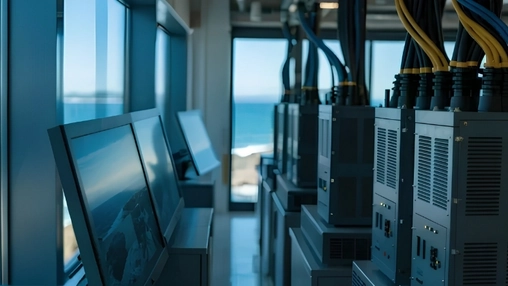
C3ntro Telecom and Telconet announced on 14 May 2026 a joint venture to build CSN-2, a fiber network combining an undersea cable with an overland corridor across the Gulf of Mexico. Unlike previous regional upgrades, CSN-2 was designed from the outset as a single unified platform rather than a patchwork of interconnected operator segments.
Running from Veracruz, Mexico to Apalachee Beach, Florida, the submarine cable includes branches serving Galveston, Texas, providing direct access to Houston, and a potential link to Bonita Beach connecting into Telconet's existing CSN-1 cable. On land, the route integrates with C3ntro's TIKVA network, extending the full corridor from Querétaro, Mexico to Phoenix, Arizona.
Placing the full corridor under one architecture removes the handoff points between operators that typically add latency and cost on multi-party connections. Both companies bring active infrastructure to the arrangement: Telconet's CSN-1 and C3ntro's TIKVA network are expected to reach delivery in Q4 2026, and CSN-2 builds on that base.
Gulf of Mexico routing has long lagged behind Atlantic and Pacific corridors in both capacity and diversity, even as Mexico's data centre pipeline has expanded. Demand along this corridor has grown without matching infrastructure, and CSN-2 targets that gap directly by adding route options across a stretch that connects North America with Latin America but has historically offered limited redundancy.
Existing regional systems were not built to absorb AI workloads and hyperscale traffic at scale. CSN-2 is framed as infrastructure suited to those volumes.
Related News


SUBSCRIBE FOR UPDATES
By submitting, you agree to receive email communications from the event organizers, including upcoming promotions and discounted tickets, news, and access to related events.