INSIGHTS
The Gulf Tops Global Subsea Cable Risk Index
The Persian Gulf is now the world's most perilous zone for subsea internet cables, forcing operators to deploy predictive monitoring software
8 Jun 2026
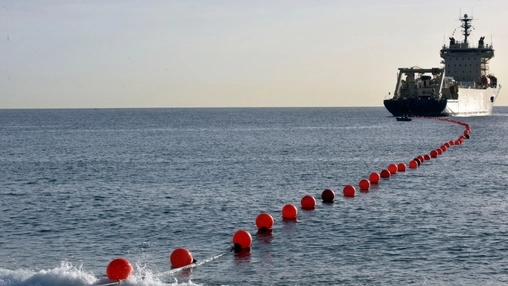
The narrow floor of the Persian Gulf is crowded, muddy, and increasingly fragile. Seated beneath one of the world's most volatile shipping lanes is a dense web of 17 subsea fiber-optic cables that carry the vast majority of digital traffic between Europe and Asia. A new risk report by Starboard Maritime Intelligence gives this critical marine corridor a threat score of 4.6 out of 5.0, ranking it the most hazardous underwater data zone on the planet. In the digital age, a severed wire is not just a local nuisance; it is an international emergency.
Much of the true vulnerability, however, lies less in the initial damage than in the paralysis that follows. In normal times, a deepwater infrastructure fault takes roughly forty days to repair. Today, because specialized marine repair vessels cannot operate safely within active conflict zones, a single broken line threatens to trigger indefinite internet blackouts.
Faced with a diplomatic and military standstill on the water, telecommunication operators are turning to data-fusion software platforms to prevent accidents before they happen. These systems analyze live shipping activity to flag anomalous movements, such as unauthorized loitering or sudden course deviations, which usually precede careless anchoring accidents or deliberate sabotage.
By shrinking emergency response times from twenty-five minutes to just three, this technology aims to intercept crises early. During recent field trials, the system generated 86 automated security alerts, successfully compelling three high-risk commercial vessels to alter their courses away from critical infrastructure.
Yet software is merely a plaster on a deeper structural wound. While automated surveillance can warn operators of a drifting anchor, it cannot fix a broken pipe in a war zone, nor can it resolve the underlying geopolitical frictions that make the waters so hazardous. For global commerce, the ultimate trade-off is stark: relying on a physical network built in a more stable era means accepting that the world's digital lifelines are only as secure as the volatile seas above them.
Related News


SUBSCRIBE FOR UPDATES
By submitting, you agree to receive email communications from the event organizers, including upcoming promotions and discounted tickets, news, and access to related events.